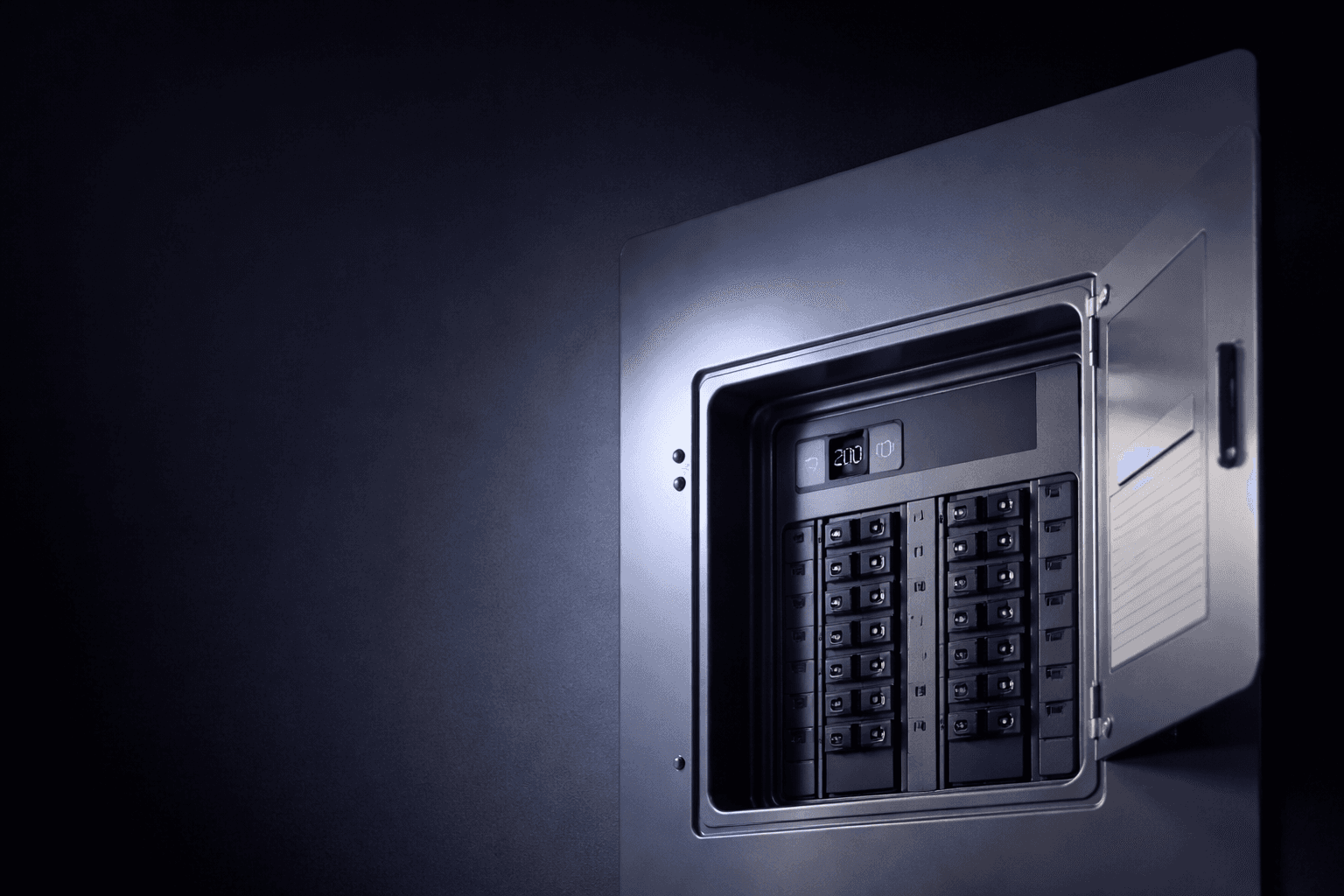

Upgrading an electrical panel is one of the most common — and most misunderstood — electrical improvements in residential construction. From an engineering and permitting standpoint, the electrical panel is the backbone of a home’s power distribution system. From a homeowner’s perspective, it directly affects safety, capacity, resale appeal, and the ability to support modern appliances.
This guide explains electrical panel upgrade costs in Central Indiana, what drives those costs, when upgrades are typically required, and how panel sizing decisions are evaluated during design, renovation, and permitting. All pricing reflects current 2026 construction and labor conditions in Central Indiana and is written from an AEC (Architecture–Engineering–Construction) perspective.
Upgrading an electrical panel is one of the most common — and most misunderstood — electrical improvements in residential construction. From an engineering and permitting standpoint, the electrical panel is the backbone of a home’s power distribution system. From a homeowner’s perspective, it directly affects safety, capacity, resale appeal, and the ability to support modern appliances.
This guide explains electrical panel upgrade costs in Central Indiana, what drives those costs, when upgrades are typically required, and how panel sizing decisions are evaluated during design, renovation, and permitting. All pricing reflects current 2026 construction and labor conditions in Central Indiana and is written from an AEC (Architecture–Engineering–Construction) perspective.
Quick Cost Overview (Central Indiana)
Quick Cost Overview (Central Indiana)
Most residential electrical panel upgrades in Indiana fall within the following ranges:
Typical range: $1,400 – $3,500
Most common upgrade (100A → 200A): $1,600 – $3,200
High-capacity or complex upgrades: $4,000 – $6,500+
Costs vary based on service size, home age, utility coordination, code upgrades, and site conditions.
Most residential electrical panel upgrades in Indiana fall within the following ranges:
Typical range: $1,400 – $3,500
Most common upgrade (100A → 200A): $1,600 – $3,200
High-capacity or complex upgrades: $4,000 – $6,500+
Costs vary based on service size, home age, utility coordination, code upgrades, and site conditions.
What an Electrical Panel Does (and Why It Matters)
What an Electrical Panel Does (and Why It Matters)
An electrical panel receives power from the utility service and distributes it throughout the home via individual circuits. While panels themselves can physically last decades, code requirements, load demand, and safety standards change far faster.
From a design and engineering standpoint, panels must safely handle:
Connected electrical load
Simultaneous appliance demand
Fault protection (AFCI/GFCI requirements)
Proper grounding and bonding
Homes built before the mid-1990s were rarely designed for today’s electrical demand, especially with electric vehicles, heat pumps, induction ranges, and finished basements now common.
An electrical panel receives power from the utility service and distributes it throughout the home via individual circuits. While panels themselves can physically last decades, code requirements, load demand, and safety standards change far faster.
From a design and engineering standpoint, panels must safely handle:
Connected electrical load
Simultaneous appliance demand
Fault protection (AFCI/GFCI requirements)
Proper grounding and bonding
Homes built before the mid-1990s were rarely designed for today’s electrical demand, especially with electric vehicles, heat pumps, induction ranges, and finished basements now common.
Electrical Panel Sizes and Typical Indiana Costs
Electrical Panel Sizes and Typical Indiana Costs
100-Amp Service (Limited Capacity)
100-Amp Service (Limited Capacity)
Best suited only for very small or lightly loaded homes.
Panel only: $150 – $250
Panel + installation: $900 – $1,600
New installation: $1,300 – $1,800
In practice, 100-amp service is increasingly difficult to justify during renovations due to modern code and load requirements.
Best suited only for very small or lightly loaded homes.
Panel only: $150 – $250
Panel + installation: $900 – $1,600
New installation: $1,300 – $1,800
In practice, 100-amp service is increasingly difficult to justify during renovations due to modern code and load requirements.
200-Amp Service (Current Residential Standard)
200-Amp Service (Current Residential Standard)
This is the most common upgrade we see across Indiana.
Panel only: $275 – $400
Panel + installation: $1,600 – $3,200
New installation: $1,900 – $2,800
Most homes with central air, modern kitchens, finished basements, or EV charging infrastructure require 200 amps to pass load calculations.
This is the most common upgrade we see across Indiana.
Panel only: $275 – $400
Panel + installation: $1,600 – $3,200
New installation: $1,900 – $2,800
Most homes with central air, modern kitchens, finished basements, or EV charging infrastructure require 200 amps to pass load calculations.
300-Amp Service (Specialty Residential Use)
300-Amp Service (Specialty Residential Use)
Less common, typically used where large electrical demand exists.
Panel only: $400 – $550
Panel + installation: $2,200 – $4,200
New installation: $2,500 – $5,000
Often evaluated for workshops, accessory structures, or homes with multiple large electric systems.
Less common, typically used where large electrical demand exists.
Panel only: $400 – $550
Panel + installation: $2,200 – $4,200
New installation: $2,500 – $5,000
Often evaluated for workshops, accessory structures, or homes with multiple large electric systems.
400-Amp Service (Large or Luxury Homes)
400-Amp Service (Large or Luxury Homes)
Used primarily for high-end residences or mixed-use properties.
Panel only: $550+
Panel + installation: $2,800 – $4,800
New installation: $4,500 – $6,500
These upgrades often require additional coordination with the utility provider and more extensive grounding systems.
Used primarily for high-end residences or mixed-use properties.
Panel only: $550+
Panel + installation: $2,800 – $4,800
New installation: $4,500 – $6,500
These upgrades often require additional coordination with the utility provider and more extensive grounding systems.
When an Electrical Panel Upgrade Is Typically Required
When an Electrical Panel Upgrade Is Typically Required
From an engineering review standpoint, upgrades are commonly triggered by:
Repeated breaker tripping or overheating
Flickering or dimming lights
Adding HVAC systems, EV chargers, or major appliances
Home additions or finished basements
Replacement of fuse panels
Outdated or recalled panel brands
Insurance or resale requirements
Code compliance during permitted renovations
Panels are often flagged during inspections when homes undergo remodels, even if they are technically still functioning.
From an engineering review standpoint, upgrades are commonly triggered by:
Repeated breaker tripping or overheating
Flickering or dimming lights
Adding HVAC systems, EV chargers, or major appliances
Home additions or finished basements
Replacement of fuse panels
Outdated or recalled panel brands
Insurance or resale requirements
Code compliance during permitted renovations
Panels are often flagged during inspections when homes undergo remodels, even if they are technically still functioning.
Key Cost Factors in Indiana Panel Upgrades
Key Cost Factors in Indiana Panel Upgrades
1. Service Size Increase
Larger amperage requires heavier conductors, larger breakers, and sometimes utility upgrades.
2. Existing Electrical Condition
Older homes may require grounding corrections, service mast replacement, or conduit upgrades.
3. Utility Coordination
Some upgrades require temporary disconnects, meter replacement, or service relocation coordinated with the local utility.
4. Code Compliance Updates
Modern AFCI and GFCI protection may require additional breakers beyond the panel itself.
5. Panel Location
Panels that must be relocated for clearance or access can significantly increase labor.
1. Service Size Increase
Larger amperage requires heavier
conductors, larger breakers, and
sometimes utility upgrades.
2. Existing Electrical Condition
Older homes may require
grounding corrections, service
mast replacement, or conduit
upgrades.
3. Utility Coordination
Some upgrades require
temporary disconnects, meter
replacement, or service
relocation coordinated with the
local utility.
4. Code Compliance Updates
Modern AFCI and GFCI protection
may require additional breakers
beyond the panel itself.
5. Panel Location
Panels that must be relocated for
clearance or access can
significantly increase labor.
Replace vs. Upgrade: What’s the Difference?
Replace vs. Upgrade: What’s the Difference?
Replacing a panel with the same amperage typically saves only $100–$200 compared to upgrading. Labor effort remains nearly identical, which is why upgrades are often recommended during permitted work if future load growth is expected.
From a long-term planning perspective, upsizing once is often more cost-efficient than upgrading again later.
Replacing a panel with the same amperage typically saves only $100–$200 compared to upgrading. Labor effort remains nearly identical, which is why upgrades are often recommended during permitted work if future load growth is expected.
From a long-term planning perspective, upsizing once is often more cost-efficient than upgrading again later.
Subpanels: When They Make Sense
Subpanels: When They Make Sense
Subpanels are frequently used to:
Serve additions or garages
Reduce long wire runs
Add breaker capacity without immediate service upgrades
However, subpanels do not increase total service capacity, and many installations still require a main service upgrade to remain code-compliant.
Subpanels are frequently used to:
Serve additions or garages
Reduce long wire runs
Add breaker capacity without immediate service upgrades
However, subpanels do not increase total service capacity, and many installations still require a main service upgrade to remain code-compliant.
Pros and Cons of Electrical Panel Upgrades
Pros and Cons of Electrical Panel Upgrades
Advantages
Supports modern electrical demand
Improves system reliability
Reduces overload risk
Simplifies future renovations
Positively affects resale and inspections
Considerations
Upfront cost
Temporary power interruptions
Coordination with utility and inspections
Advantages
Supports modern electrical demand
Improves system reliability
Reduces overload risk
Simplifies future renovations
Positively affects resale and inspections
Considerations
Upfront cost
Temporary power interruptions
Coordination with utility and inspections
Professional Installation vs. DIY
Professional Installation vs. DIY
Electrical panel upgrades are not suitable for DIY work. They require:
Licensed electricians
Utility coordination
Permits and inspections
Strict adherence to current electrical codes
Improper installation can create serious safety hazards and inspection failures during resale or refinancing.
Electrical panel upgrades are not suitable for DIY work. They require:
Licensed electricians
Utility coordination
Permits and inspections
Strict adherence to current electrical codes
Improper installation can create serious safety hazards and inspection failures during resale or refinancing.
How to Control Electrical Upgrade Costs
How to Control Electrical Upgrade Costs
Perform accurate electrical load calculations
Coordinate upgrades with other renovations
Plan for future electrical demand
Obtain multiple written estimates
Address panel upgrades early in project planning
From an AEC standpoint, panel upgrades are best evaluated during the design phase, not after construction begins.
Perform accurate electrical load calculations
Coordinate upgrades with other renovations
Plan for future electrical demand
Obtain multiple written estimates
Address panel upgrades early in project planning
From an AEC standpoint, panel upgrades are best evaluated during the design phase, not after construction begins.
Indiana-Specific Planning Notes
Indiana-Specific Planning Notes
In Indiana, electrical panel upgrades often intersect with:
Older housing stock
Utility service limitations
Local inspection practices
Insurance and underwriting requirements
Early coordination between design professionals, electricians, and inspectors helps avoid delays and unexpected scope changes.
In Indiana, electrical panel upgrades often intersect with:
Older housing stock
Utility service limitations
Local inspection practices
Insurance and underwriting requirements
Early coordination between design professionals, electricians, and inspectors helps avoid delays and unexpected scope changes.
Planning an Electrical Panel Upgrade in Indiana?
Planning an Electrical Panel Upgrade in Indiana?
If you are planning a renovation, addition, or system upgrade, understanding your electrical capacity early can prevent redesigns and permit issues later.
Ready to evaluate your electrical upgrade needs?
Visit our Indiana project intake page to provide basic property details and connect with our team:
👉 Start Your Indiana Electrical Project Here
Our team reviews electrical upgrades in the context of the entire building system, helping homeowners make informed, code-aware decisions before construction begins.
If you are planning a renovation, addition, or system upgrade, understanding your electrical capacity early can prevent redesigns and permit issues later.
Ready to evaluate your electrical upgrade needs?
Visit our Indiana project intake page to provide basic property details and connect with our team:
👉 Start Your Indiana Electrical Project Here
Our team reviews electrical upgrades in the context of the entire building system, helping homeowners make informed, code-aware decisions before construction begins.
by Clayborn Group | February 12, 2026

We don’t just design buildings—we engineer solutions. Focused on residential and commercial projects, we combine architectural vision with engineering precision to deliver results that exceed expectations. Our strategic, no-nonsense approach ensures streamlined execution, uncompromising quality, and real value for every client.
Clayborn ©
2026
We don’t just design buildings—we engineer solutions. Focused on residential and commercial projects, we combine architectural vision with engineering precision to deliver results that exceed expectations. Our strategic, no-nonsense approach ensures streamlined execution, uncompromising quality, and real value for every client.
Clayborn ©
2026